TCGplayer: Scan & Track TCGs
4.54.94KReviews
Analysis ByAppCompare
I knew TCGplayer: Scan & Track TCGs would be most useful during the messy moments of collecting: standing at a card shop, sorting a box of older cards, or trying to decide whether a trade was sensible without opening a dozen browser tabs. After spending time with it, my view is that it has a strong first-week appeal, but its lasting value depends on whether you actually buy, sell, organize, or regularly check trading cards. It is not simply a novelty scanner. It can become a practical part of a collection routine, although it also asks you to tolerate some manual checking and occasional friction.
This is a free Tools app from TCGplayer, Inc, aimed at people who handle trading cards across different games. Its central appeal is bringing card identification, price checking, collection tracking, and shopping into one place. That combination makes more sense than using a camera app for recognition, a spreadsheet for inventory, and a separate marketplace for purchases. Still, combining several jobs does not automatically make every job equally convenient, so I looked at where it saves time and where a collector may still prefer another method.
From quick scans to a collection habit
The first week feels immediately useful
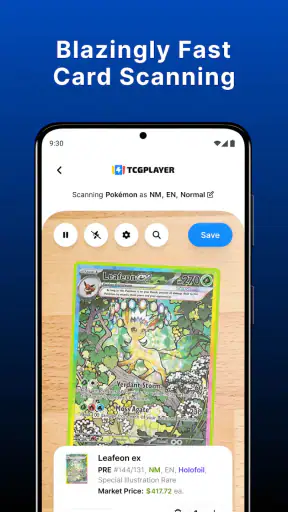
The first thing I liked was how quickly the app gives a new user something practical to do. Rather than asking me to build a complicated catalog before seeing any benefit, it encourages a direct workflow: take a card, scan it, inspect the result, and decide what to do next. That is a much friendlier starting point than manually typing set names, card numbers, and versions into a spreadsheet.
The scanning idea is especially appealing when a collection has become visually familiar but administratively confusing. A few cards may be easy to recognize, while others have similar artwork, alternate treatments, or different printings. In those situations, the camera is not just a shortcut; it changes the task from remembering card details to checking them. I still treat the result as a starting point rather than an unquestionable answer, because a collector should confirm the exact version before relying on a price or adding an item to a carefully maintained inventory.
That distinction matters in a realistic situation. Imagine finding a stack of cards while cleaning a room and wanting to know whether it is worth sorting. I would scan the obvious cards first, separate the interesting results, and only then spend time checking condition and edition details. This is far more sensible than researching every common card individually. The app is at its best when it helps me decide where attention is worth spending.
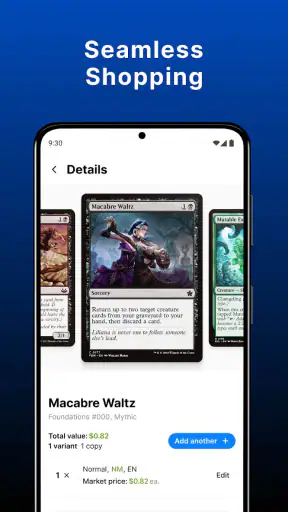
During the first week, the shopping side also makes the experience feel complete. A price result is more useful when I can continue toward a purchase without leaving the same ecosystem. That does not mean I would buy automatically. I would compare condition, seller details, shipping, and the difference between a displayed market figure and the final cost. The app can shorten discovery, but it should not replace normal buying judgment.
What makes it more than a camera tool
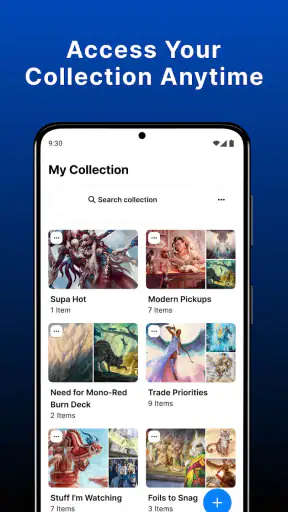
The useful part is the connection between scanning and collection management. A scanner that only tells me a card’s name would be convenient once and forgettable afterward. Here, the broader purpose is to turn identified cards into a collection I can revisit. That creates a path from discovery to organization: identify a card, check its value, keep track of it, and return later when the collection changes.
I found this particularly helpful for collectors who acquire cards in batches rather than one at a time. Opening several packs, sorting a trade, or buying a mixed lot can create a backlog that feels too tedious to document manually. Scanning reduces the resistance at the beginning. My practical advice is to avoid trying to perfect the entire collection in one sitting. Start with a single box, a binder section, or cards you are most likely to trade. A smaller, accurate collection is more useful than a huge list filled with uncertain entries.
The app also makes sense for someone who wants a quick sense of what they own before making a trade. I would not use a single displayed value as proof that a deal is fair, but I would use the app to identify cards that deserve closer inspection. That is one of its less obvious strengths: it works as a triage tool. It helps separate ordinary cards from cards where condition, printing, or current demand could change the decision.
Where the usual alternatives still win
Compared with a spreadsheet, this app is faster at getting card information into a collection, especially when I do not already know every identifying detail. A spreadsheet remains better for custom fields, personal notes, complex sorting, and long-term records designed around one collector’s exact system. If I need to record purchase cost, storage location, trade history, or condition in a highly specific format, a spreadsheet may still be the more flexible option.
Compared with checking individual marketplace pages in a browser, the app is more convenient for moving from recognition to a price view and then to shopping. The trade-off is that a marketplace search may expose more context for a single card, while the app is designed for a faster overall workflow. I would choose the app for scanning and first-pass research, then slow down in a browser or marketplace view when the card is valuable enough to justify detailed comparison.
Compared with collection apps built around a single trading card game, TCGplayer’s broader approach is more attractive to people who move between games. That breadth can be a real advantage for mixed collections. On the other hand, a specialist tracker may feel more focused if one game dominates a user’s life and they want very detailed, game-specific organization. The right choice depends less on which interface looks nicer and more on whether your collection crosses game boundaries.
What remains valuable after the novelty fades
Month-to-month usefulness depends on activity
After the excitement of scanning the first pile wears off, the app has to earn its place through recurring decisions. I see lasting value in three situations: I keep acquiring cards, I regularly check cards before trades or sales, or I actively maintain a collection that changes over time. In those cases, the app becomes a reference point rather than a one-time toy.
For an active buyer, the recurring benefit is speed. Before purchasing a lot, I can use the app to identify cards that deserve closer attention instead of guessing from a seller’s broad description. Before visiting a shop, I can review what I already own and reduce the chance of buying duplicates. Before a trade, I can check several cards in sequence and establish a reasonable starting point for discussion.
For a seller, the app can help with the early stages of sorting. I would use it to build a rough list, then inspect condition and verify the exact printing before creating a listing. This two-stage process is important. Scanning can reduce the labor of recognition, but it does not remove the responsibility of describing a card honestly. A card’s condition can change its practical value more than a quick identification screen suggests.
For a casual collector, the value is less predictable. If I buy a few packs occasionally and rarely revisit the cards, the app may be useful during a short burst of interest and then sit unused. That is not a flaw in the scanner itself; it is a reminder that collection tools reward repeated behavior. I would not install it expecting the app alone to create a collecting habit.
A better recurring workflow
My preferred routine would be short and regular rather than ambitious. After acquiring cards, I would scan only the cards I might keep, trade, sell, or research. I would review uncertain matches immediately, because postponing them makes it harder to remember which physical card produced which result. Then I would use a separate physical sorting system, such as labeled boxes or binder sections, so the digital record and the real collection remain understandable together.
One useful habit is to separate “identified” from “fully verified” in my own process. The app can help me recognize a card, but I would not treat that as confirmation of condition, language, edition, or special treatment. Keeping those stages mentally separate prevents a common mistake: assuming that a fast scan has completed the entire valuation job.
I would also avoid repeatedly checking prices without a reason. Market values can influence collecting decisions, but constant refreshing can turn the hobby into a stressful watchlist. The app is more useful when a price check answers a real question: Should I trade this? Is this lot worth investigating? Do I already own this card? Is it time to organize cards for sale? That keeps the tool connected to action instead of turning it into background noise.
The maintenance burden is manageable, not invisible
The main maintenance burden is not installing the app or learning the basic scan. It is keeping the collection meaningful as physical cards move. Cards get traded, sold, misplaced, stored in another binder, or acquired in duplicates. If I add everything but never remove anything, the digital collection gradually becomes less trustworthy. That makes future searches and decisions less useful.
For that reason, I would not promise myself that every card must be recorded. A selective catalog is easier to maintain. I would prioritize cards with financial relevance, cards I want to protect, cards I may trade, and cards that are difficult to identify from memory. Common duplicates can wait unless tracking them serves a specific purpose.
There is also a human cost to batch scanning. It is faster than typing, but it is still repetitive work when the pile is large. The temptation is to rush, accept every result, and move on. That may be fine for a rough inventory, but it is risky for cards that look similar or have multiple versions. The more valuable or important the card, the more carefully I would inspect the result.
The current version is 5.2.0, and the app supports devices using operating system version 9 or later. That makes it accessible to many users with older compatible devices, although anyone relying on an aging phone should still expect the camera experience to depend on the device itself. A clear camera and good lighting can make scanning more comfortable; poor conditions can add frustration that no collection feature can fully solve.
Where fatigue starts to appear
The first source of fatigue is repetition. Scanning one card feels satisfying; scanning a large, low-value stack can feel like administrative work. I would not recommend using the app as a reason to catalog every card immediately. The better approach is to use it where the information will change a decision.
The second is uncertainty around versions and condition. A collector may want one definitive number, but real card value depends on details that a quick identification step cannot settle by itself. If I am comparing a heavily played card with a clean copy, I need to interpret the result carefully. The app can point me toward a card and a market context, but I still have to apply collector knowledge.
The third is the risk of becoming too dependent on a digital estimate. A price can be useful for orientation while still being a poor reason to buy, sell, or trade on its own. I would combine the app’s information with physical inspection, current marketplace context, and the exact terms of the transaction. That is especially important when the difference between versions is subtle.
Shopping can create another kind of fatigue. Having a purchase path close to a price check is convenient, but it can also encourage impulse buying. I find the app more valuable when I use shopping as the final step of a decision I already understand, not as an automatic response to seeing a card I like. Collectors who want strict budget control may prefer to research in one place and buy later, after a cooling-off period.
Who should keep it installed
I would recommend it to collectors who handle cards often, especially those with mixed collections or a steady flow of trades and purchases. It is also a good fit for someone who dislikes manual data entry but still wants more structure than a pile of binders provides. The free price removes the biggest barrier to trying it, and its Teen content rating makes it appropriate for a broad older audience, subject to normal family judgment.
I would be more cautious recommending it to a person who owns a small, stable collection and rarely buys or trades. That user may get the initial thrill of scanning but not enough recurring benefit to justify maintaining a digital inventory. I would also point serious record keepers toward a more customizable system if they need detailed accounting, storage maps, acquisition costs, or specialized condition notes. The app can support those workflows, but it should not be mistaken for a fully personalized database.
The app has a 4.5 average from around thirteen thousand ratings, with roughly four thousand nine hundred written reviews and over one million installs. Those figures suggest that it has reached a substantial audience and that many people find the basic concept worthwhile. I still would not treat popularity as proof that it fits every collecting style. The deciding question is whether I will use scanning and tracking repeatedly enough to offset the effort of keeping the records accurate.
My long-term verdict
My lasting impression is positive, with a clear condition: this works best as a working tool, not as a passive collection showcase. The first-week experience is easy to appreciate because scanning turns an intimidating pile into something searchable and understandable. The month-to-month value appears when I use that information to make better buying, trading, selling, and organizing decisions.
The app earns permanent space on my phone when I treat it as part of a simple routine: scan selectively, verify important matches, keep physical and digital organization aligned, and revisit the collection when cards actually move. That approach avoids the two extremes I see most often: cataloging every low-value card until the hobby feels like paperwork, or accepting every scan and price as final.
TCGplayer, Inc has made a useful bridge between card recognition, collection tracking, price research, and shopping. It does not eliminate the judgment required from a collector, and it cannot make a large inventory maintenance-free. But for someone who wants a quicker first pass and a practical way to keep card activity organized, the recurring value is real when the app is tied to real collecting decisions.
I would install it before sorting a mixed lot, preparing for a trade, or deciding whether a growing collection deserves better organization. I would skip it if I wanted a completely custom database or if I rarely touch trading cards. For everyone in between, the sensible test is simple: use it on one meaningful section of your collection, keep only results you can maintain, and see whether the next buying or trading decision becomes easier. If it does, the app has moved beyond novelty and earned its place.
FAQ
What is TCGplayer: Scan & Track TCGs used for?
TCGplayer: Scan & Track TCGs is designed to help collectors identify and organize trading cards, including cards from popular games such as Pokémon, Magic: The Gathering, and Yu-Gi-Oh!. You can use the scanning feature to look up cards, review market information, check recent pricing, and build a digital collection. It is especially useful for estimating the value of cards without manually searching through large online catalogs.
How accurate is the card scanner in TCGplayer: Scan & Track TCGs?
The scanner can recognize many cards quickly when the card is placed clearly within the camera frame and has good lighting. However, results may vary when cards are damaged, sleeved, in foreign languages, from unusual printings, or photographed at an angle. It is always worth checking the set, number, condition, and edition shown in the results before adding a card to your collection or relying on the displayed price.
Does the app show the exact value of my trading cards?
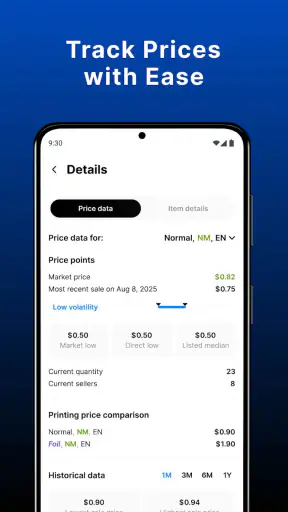
The app provides pricing information based on available marketplace data, but the displayed amount should be treated as an estimate rather than a guaranteed selling price. Card value can change frequently depending on condition, edition, language, demand, seller fees, shipping, and current market activity. A near-mint card may be worth considerably more than a played copy, so inspect the details carefully before making a trade or sale.
Can I manage and track my entire card collection with the app?
The collection tools allow you to record cards digitally and keep track of what you own, making it easier to organize a growing binder or inventory. Depending on the card and supported game, you may be able to review quantities and estimated values. Nevertheless, collectors should verify that every scanned result matches the physical card, particularly when multiple versions share similar artwork or names.
Is TCGplayer: Scan & Track TCGs free to download and use?
The app can generally be downloaded without an upfront purchase, allowing users to explore its scanning and collection features. Some functions may require an account, an internet connection, or access to TCGplayer services. Availability and feature limits can change with updates, and marketplace transactions may involve separate costs such as card prices, shipping, taxes, or seller-related fees.
Pros
- Quickly identifies many cards using the camera scanner.
- Tracks estimated collection value in one convenient place.
- Supports popular games such as Pokémon
- Magic
- and Yu-Gi-Oh!.
- Useful price history helps users monitor market changes.
- Collection tools make it easier to organize cards on mobile.
Cons
- Scan accuracy can vary with glare
- damaged cards
- or unusual editions.
- Some card variants may require manual selection after scanning.
- Market prices can change quickly and may not match local offers.
- Advanced tracking features may feel limited for very large collections.
- Requires an account and internet connection for many functions.